I'm a wife, stay-at-home mom, crafter, and blogger living in rural New England. As seen in Martha Stewart Living, Food Network Magazine, and more! | Tutorials, DIY, crafts, parenting tips, recipes, money saving tips, product reviews, local product features, New England living, intentional living, and more! |
Introducing a bottle can be difficult at first, especially if your baby had been exclusively breastfed. Here are a few quick tips on ways to make bottle feeding easier. | This post contains affiliate links and an honest review on products provided by Nuby |
When our little one was about 3.5 months old we had no choice but to make the switch from exclusively breastfed to formula fed because she was unable to digest my breastmilk (if you'd like, you can read more about that HERE). Going cold turkey from breast to bottle was hard on everyone and I definitely learned some lessons along the way.
Bottle Feeding Tips
Use a "natural-shaped" bottle
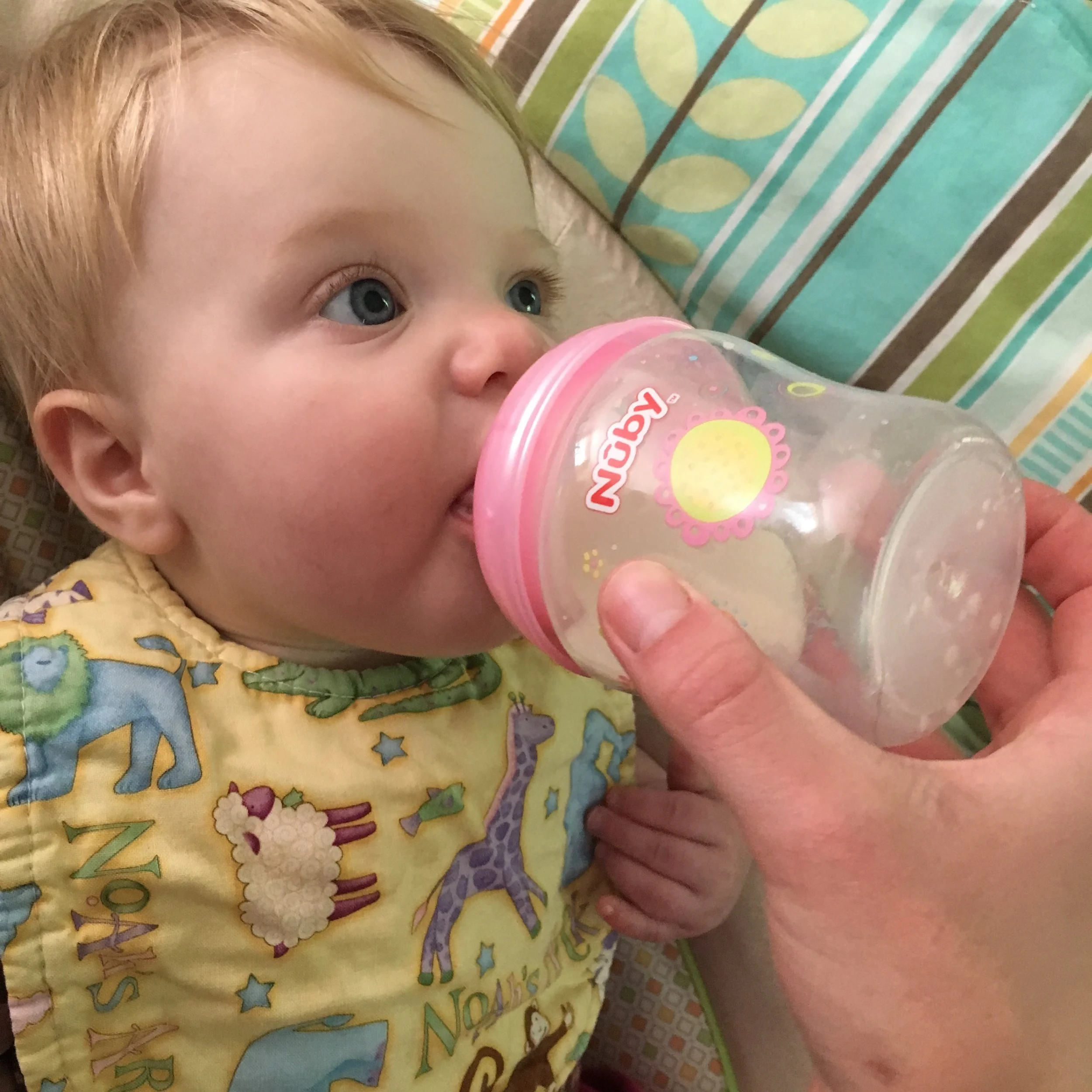
In the beginning we tried a lot of different kinds of bottles to see what our baby would take. It was a lot of trial-and-error at first but we quickly found that she took best to bottles in a natural shape that mimics the shape of a breast, like Nuby's Natural Touch Bottles - rather than the traditionally-shaped narrow bottles. For her, latching on to a natural bottle was easier and more instinctive.
Use bottles with fewer pieces to clean
One of the first bottles we had tried was a specialty bottle that literally had 7 pieces to it that had to be taken apart and cleaned every time you used it. It was such a daunting and tedious process and ain't nobody got time for that! Thankfully using a simpler bottle system (like Nuby's Natural Touch Bottles), was a lot easier since they only have three easy-to-clean pieces - the bottle, the nipple, and the collar.
Find a comfortable and consistent place to feed in the beginning
When we first introduced the bottle, our baby just wouldn't have it. I initially tried bottle feeding her in the rocking chair I always nursed in but it just made her so mad because she was reminded of nursing. I quickly realized that in our case she needed somewhere new and comfortable to be her new feeding spot so we switched to a little bouncy chair on the floor which really helped. She sits in the chair at a comfortable, somewhat upright angle that's perfect for her and I sit on the floor facing her to feed her.
Introduce the bottle when baby is well rested and not starving
When you first start introducing a bottle to your baby, it can be very overwhelming to them so it's best to set yourself up for the highest chance of success! Your baby will likely get easily frustrated because it's something new, so try not to push the matter when they're overtired or starving. A calm baby will be more likely to try to figure out the bottle rather than just melt down at the first sign of frustration.
Be Consistent
Consistency is key. Even if your baby hates bottle feeding, keep trying and keep offering it regularly until they get the hang of it. It can be so hard in the beginning but hang in there!
- I received this item for review from Nûby but all opinions expressed are my own. Please read our full Disclosure Policy for more information -
Nûby's Natural Touch Infant Bottle with Easy Latch Nipple can be found at Wal-Mart, Babies 'R Us, and Amazon.
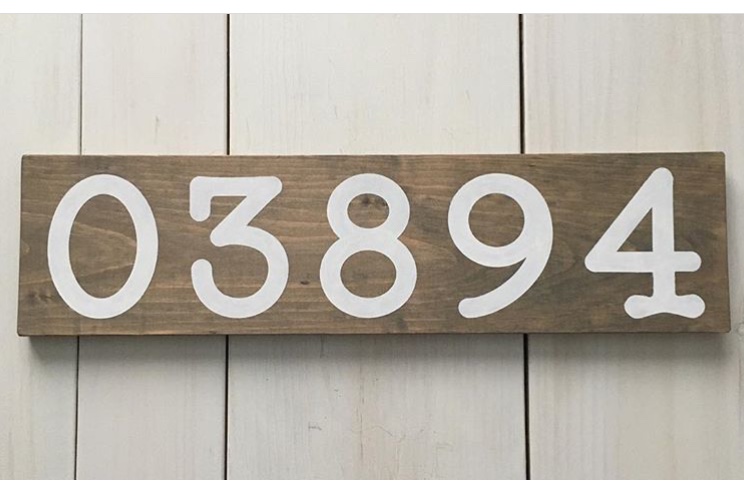
This week I’m hosting a Giveaway for one of our Custom Zip Code Signs! Entering is easy on Instagram, so please look for this photo on my account for details and to enter - good luck!
Living in the Northeast, ticks have just been awful the last few years and it seems as though you can't enjoy the outdoors anymore without finding one. It's so important to protect yourself and family from getting a tick in the first place (if you want to read more on my tips to keep ticks at bay, check out my previous post "Safeguarding Against TICKS"). But in the event you unfortunately get one on you, you need to be prepared so you can remove that awful thing ASAP. By having a Tick Kit handy, you'll be able to remove the tick quickly and safely and hopefully lessen your chances of catching a tick-borne illness. | This post contains affiliate links and personal tips - Disclaimer: I am not a medical expert, always check with your doctor for advice |
I recommend putting together several tick removal kits and keeping them handy at all times - keep one at home, one in the car, and one in your hiking bag for outdoor trips or diaper bag for playground excursions. That way if you're out and about and find one on you or your family you can safely remove it and document it, ready for testing purposes.
If you unfortunately get a tick attached to you, safely remove it immediately to help reduce your exposure to tick borne illnesses. Use the alcohol wipes to cleanse the area where the tick was removed as well as wipe down the tick spoon after removal.
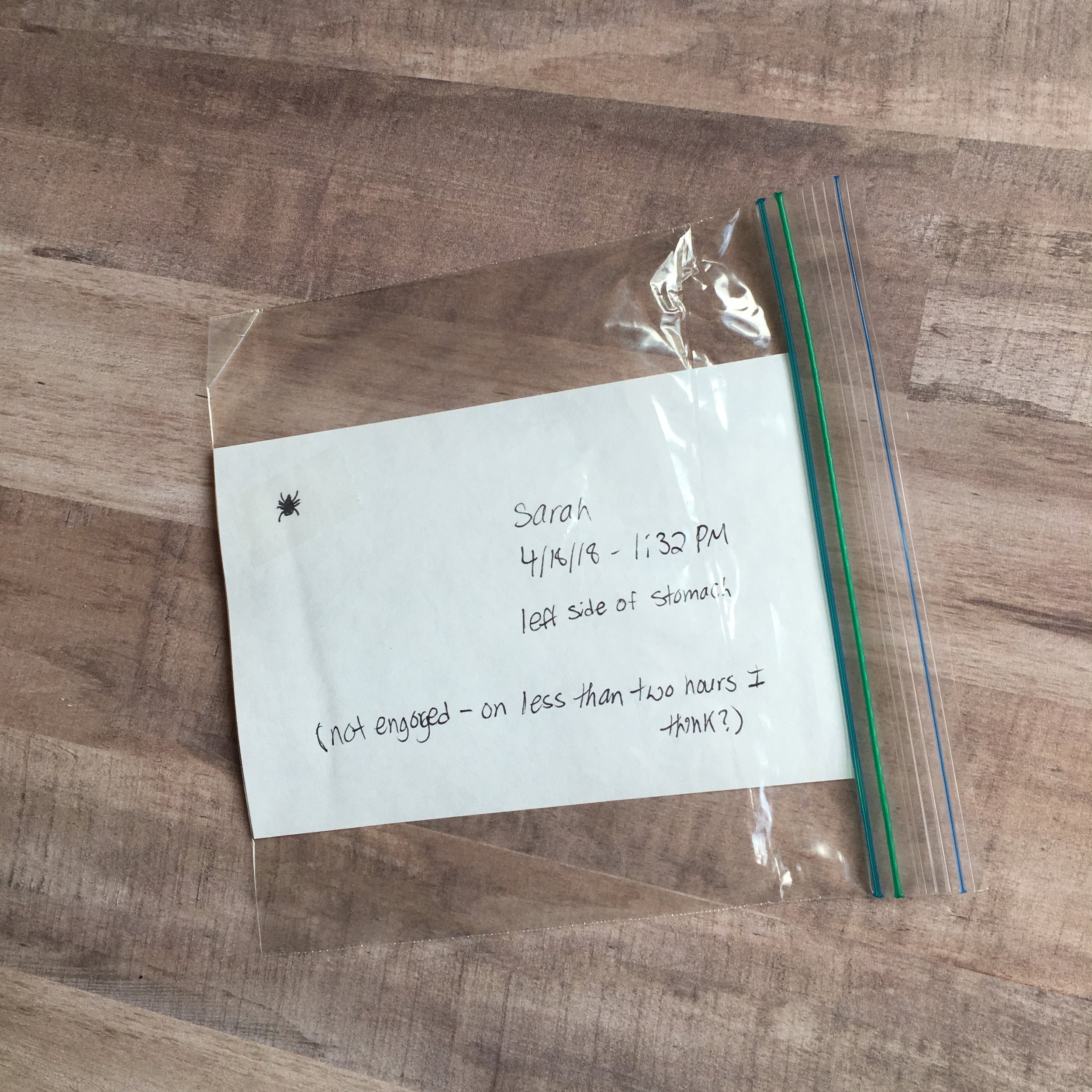
It's important to keep the tick itself - as well as note when and where it was located and any other information about the situation (if the tick was engorged, your best guess at how long it could have been attached, etc). Tape the tick to an index card and use your pen to record all of this information, then place in an empty ziplock bag - feel free to double bag it if you want. Then call your doctor right away for advice on any precautions you may need to take, or if he wants to order to get the tick tested.
Whether or not you get the tick tested (either by your doctor or privately), you can also report your tick bite to TickEncounters. TickEncounters is a program run by the University of Rhode Island, recording and monitoring trends and information regarding tick bites and your information helps aid in their research. They can also help advise you about how to get the tick tested for your peace of mind in the event your doctor's office doesn't do it.
DISCLAIMER: I am NOT an expert or medical professional. These are tips and information I've learned over the years living in a tick-prone area. Always check with your own doctor and local experts for the best prevention and treatment plans for yourself and your family. Discuss with your doctor ahead of time what to do in the event of a tick bite (and I hope you never need to use that information).
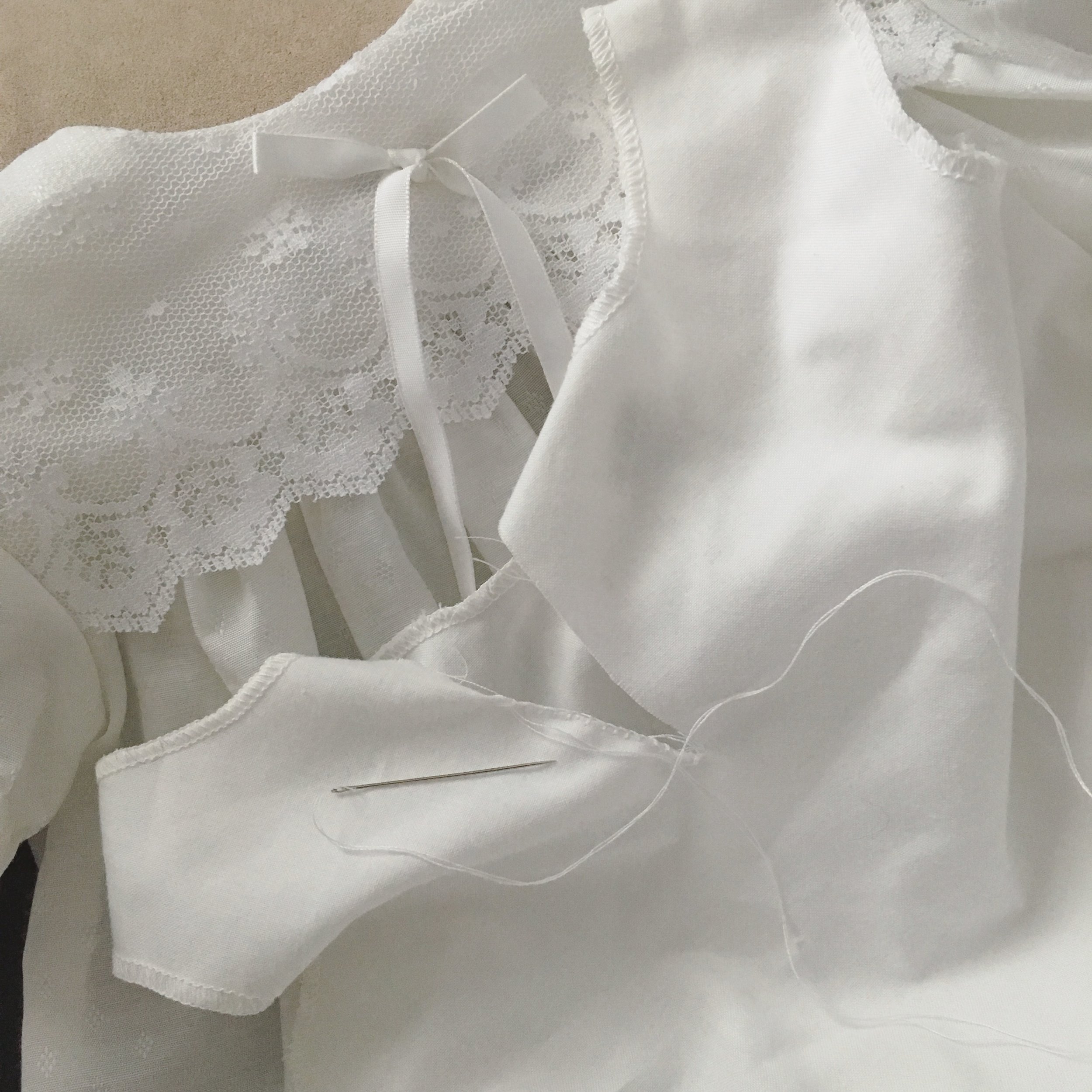
A week ago our youngest got Baptized. She wore the same Baptism Dress I did and big sister did, which is so special! ...However I did have to cut a slit in the slip to get it over her head that morning (she's a big baby!). So now I’m hemming that, and the dress will be cleaned and put away for their own kids someday.
Do you have any heirloom clothing in your family? We also have my Grandmother's wedding veil/crown from the 1940's that both my sister and I wore for our First Communions - so very special.
So excited to say that our ornaments are now being carried at the beautiful farm + table in Kennebunkport, Maine! This eclectic gift shop features lots of handmade and small-batch goods made by artisans all over the country and I’m so honored to be included.
Make sure to stop in next time you’re in the area!
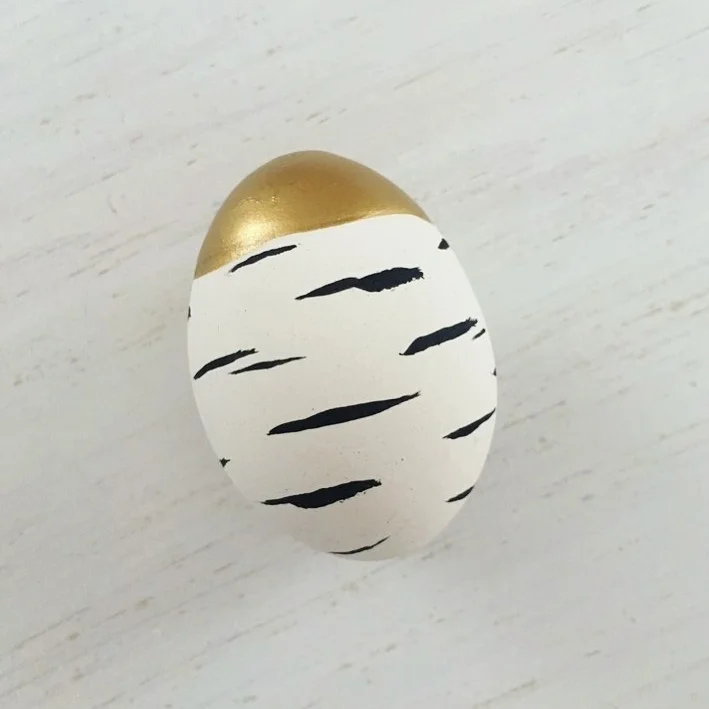
A few months ago, Food Network Magazine emailed me and asked if I'd be interested in designing a New Hampshire-themed egg for their Easter issue! I was completely blown away and honored for the opportunity. My New Hampshire egg design was a gold-dipped, faux birch bark egg - gold-dipped to represent our State House with it's golden dome, and the birch bark paint finish to represent our our state tree, the white birch. Fun Fact: My great-grandfather was a steeplejack and did the gold leaf on the New Hampshire capitol dome back in the 1920's! | This post contains affiliate links |
Creating one of these gold-dipped birch eggs for yourself is pretty simple! Here's the full how-to:
Materials:
faux egg (for the Food Network Magazine example and most of the photos in this how-to, I used an Eggnot, a fake ceramic egg - but you could also use a wooden egg. If you use real hardboiled eggs I would not recommend eating them after painting)
white acrylic paint (if your fake egg isn't already white to begin with)
paper cup
thin paintbrush
tinfoil to make a stand for the egg to dry on
How-to:
1. First, make a tinfoil ring to hold your egg while it dries between steps. Then if your egg isn't already white, paint white and allow to dry between coats. It may need several coats of paint.
2. Next shake the gold acrylic paint well and pour about half an inch of it into a small paper cup. Dip the top of the egg carefully into the cup. (I found it best to to do the gold-dip first, then paint the bark pattern after since sometimes the black lines were visible under the gold-dip.) Gold paint tends to be thick and you may have some swirling or thick drips after dipping. You can try to smooth these out a bit with a paintbrush but it usually looks cleaner if you just leave it as-is, even if you end up with a thick spot within the dip. After the gold dip, carefully place the egg in the tinfoil ring to dry.
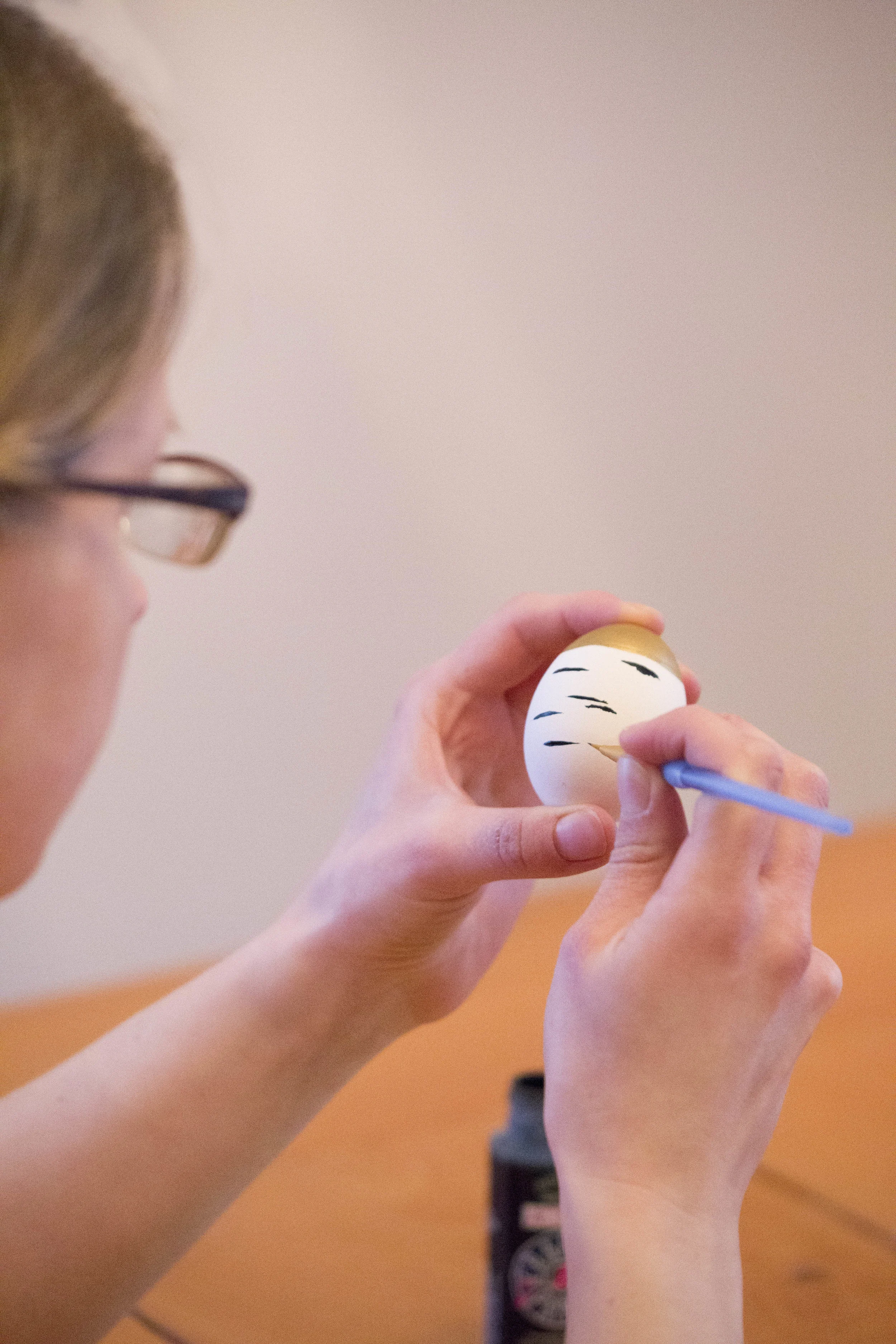
3. Once the gold-dip is dry, use a thin paint brush to paint horizontal black lines on the egg, all the way around. Vary the placement and thickness of the lines a bit to mimic the look of birch bark. You may have to carefully hold the egg for a few minutes to let it air dry a bit before carefully setting it, gold top down, into the tinfoil ring to finish drying.
And that's it! While making them can be tedious with the drying time between steps, it's really quite easy. And in the event you don't feel like tackling this project yourself, I have a limited supply of painted Wooden Gold-Dipped Birch Eggs in my Etsy Shop!
Incredibly honored and excited to say that I designed and painted the New Hampshire egg for the latest issue of Food Network Magazine! I was completely blown away when they sent me an email last November, asking if I wanted to be a contributor for this piece (um, YES!) and it’s so exciting to finally see it in print! Thank you, Food Network Magazine!
If you want to make your own NH-inspired egg, please check out my full tutorial HERE.
PS - Make sure to pick up a copy, so many creative eggs from every state - not to mention all the yummy recipes!